Organizations are facing a paradox.
They’ve never invested more in training, technology, and digital transformation. And yet, they continue to struggle with the same operational challenges:
- Recurring errors.
- Constant rework.
- Overloaded teams.
- Knowledge that never reaches the front lines.
The issue isn’t a lack of effort.
It’s an architectural problem.
Training, operations, and technology still function in silos. Employees learn at one moment, execute at another, and make decisions in yet another—often without the right support.
This is exactly where Hybrid Performance emerges as a new model for execution and management.
What Is Hybrid Performance?
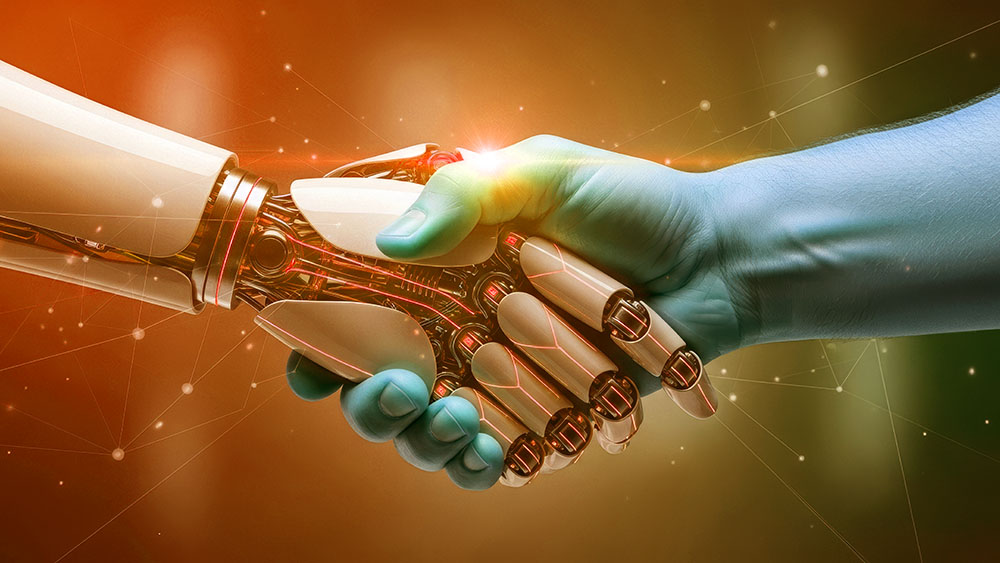
Hybrid Performance is a model that integrates Artificial Intelligence directly into the workflow while strengthening core human capabilities.
It’s not about replacing people with technology.
It’s about redistributing intelligence across the organization.
In a Hybrid Performance model, AI takes on the operational cognitive load—rule lookup, process standardization, compliance validation, and real-time technical guidance.
Meanwhile, humans focus their energy on empathy, leadership, negotiation, and strategic decision-making.
The result is an integrated ecosystem where technology and people work in sync—eliminating the gap between knowing and doing.
The Structural Problem: The Gap Between Knowing and Doing
Most organizations still operate under a traditional model:
- Train employees.
- Document processes
- Implement systems
- Expect flawless execution.
But reality looks very different.
When employees face real operational decisions, questions arise:
What’s the current rule?
Which exception applies?
What changed in the process?
Without contextual support, they rely on memory, search through lengthy documentation, or ask colleagues. This creates variability.
And variability leads to errors.
Hybrid Performance is designed to solve exactly this structural gap.
Why Traditional Training Isn’t Enough
Traditional corporate learning separates learning from execution.
Employees attend training today and are expected to apply it weeks later. Without immediate application, knowledge retention drops dramatically.
Research consistently shows that most theoretical content is quickly forgotten when not reinforced in practice.
At the same time, the operational environment is constantly evolving—processes change, rules are updated, and systems evolve.
Without integration between training and technology, organizations become overly dependent on human memory.
Hybrid Performance eliminates this dependency by embedding knowledge directly into the workflow.
How Hybrid Performance Works in Practice
Hybrid Performance comes to life through AI-powered operational support systems embedded into the tools teams already use.
This means employees don’t have to leave their workflow to find information.
Guidance appears exactly when execution happens.
If there’s uncertainty, AI suggests the next best action.
If there’s risk, the system flags it.
If rules change, updates are already built in.
This model transforms passive knowledge into active intelligence.
Learning is no longer an isolated event—it becomes part of daily operations.
This is what we call learning in the flow of work, one of the core pillars of Hybrid Performance.
Hybrid Performance and AI: Clearly Defined Roles
One of the biggest concerns in today’s workforce is job displacement by technology.
But Hybrid Performance is not about pure automation.
It’s about clarity of roles.
Artificial Intelligence handles:
- Process standardization
- Rule interpretation and retrieval
- Compliance validation
- Reduction of operational variability
- Real-time technical guidance
Humans focus on:
- Relationship management
- Customer empathy
- Complex negotiation
- Strategic decision-making
- Leadership and culture
By redistributing responsibilities, Hybrid Performance reduces cognitive overload and elevates execution quality.
Strategic Benefits of Hybrid Performance
Adopting Hybrid Performance delivers measurable impact
Reduced Operational Errors
Contextual guidance and automated standardization significantly lower error rates.
Less Rework
Fewer errors mean fewer corrections, less friction, and higher productivity.
Faster Learning Curves
New hires become productive faster by learning while executing—with support.
Greater Confidence in Execution
Teams operate with more certainty thanks to real-time validation.
Padronização em Escala
Different units execute processes with consistent quality.
Hybrid Performance creates operational consistency without limiting strategic autonomy.

Hybrid Performance vs. Traditional Model
Traditional Model
- Training interrupts operations
- Execution relies on memory
- Errors are corrected after they happen
- High variability
Hybrid Performance
- Learning happens during execution
- AI provides real-time guidance
- Errors are prevented before they occur
- Standardization is built into the system
This shift fundamentally transforms how organizations perform.
Cultural Impact of Hybrid Performance
Beyond operational gains, Hybrid Performance reshapes organizational culture.
When teams are no longer overwhelmed trying to recall complex processes, they can focus on what truly matters:
- Better customer experience
- Innovation
- Collaboration
- Development of strategic capabilities
Hybrid Performance doesn’t dehumanize work.
It creates space for people to operate at their highest value.
Why Hybrid Performance Is a Structural Evolution
Markets are becoming more demanding.
Tighter margins.
Greater competition.
More informed customers.
Organizations that rely solely on isolated training and extensive manuals tend to maintain high levels of error and rework.
Those that adopt Hybrid Performance evolve into a new model:
Assisted precision.
Consistent execution.
Applied learning.
Humans focused on strategy and relationships.
Hybrid Performance is not a tool.
It’s a structural shift in how organizations learn and execute.
Conclusion: The Future Belongs to Hybrid Organizations
Digital transformation is not just about implementing technology.
It’s about redesigning the architecture of performance.
Hybrid Performance integrates AI into operational workflows while elevating the human role within the organization.
By eliminating the gap between knowing and doing, companies create a more efficient, strategic, and sustainable environment.
Hybrid Performance isn’t a passing trend.
It’s the next stage of organizational evolution.